Showing posts with label ideas. Show all posts

Friday, May 29

Ideas from Notebook, VIII: Final Official Day

Dale Chihuly, "Flame of Liberty"

Today was interesting. The last official day of project – though I have no intention of ending my independent study in what is essentially the art of living intellectually – found me at the National Liberty Museum downtown. My time there was limited by the increased prices of parking meters and the PPA (whom I literally caught stalking my meter later in the day). Already in debt and bereft of money on hand, I came out of the day with a $41 ticket that I had taken every precaution not to get, all of which were defeated by a faulty meter. The aggravation they have caused me in the past is unbelievable. I already have a court date for June to protest an absurd $50 allegation that I was parked in a no-stopping zone. But anyway.

The National Liberty Museum is fairly new, with three stories of exhibits combining both art and information, all dedicated to espousing equality, peace and acceptance. The centerpiece of the meseum is an immense piece of red glasswork by Dale Chihuly entitled “Flame of Liberty” (the top of which can be seen above), which has an accompanying fable created by the museum for children, its main audience. The messages of non-violence and the inalienability of human rights struck a cord. The museum covers the spectrum of oppressions, discrimination, despotism and atrocities through time, along with tributes to 2,000 great heroes (both American and 400 internationals of myriad countries and cultures) and contributors towards peace; the debunking of stereotypes and assumptions; messages of peace and non-violence; and a survey of religious beliefs. Much of it was emotionally affecting. Most of all so was the stairwell, in itself a multi-story memorial to the 3,014 victims of September 11th. This moved me deeply, from the “silent” video of raw, powerful footage of that day, to the photomosaic of servicemen killed in action. Something about the museum really assesses the core aspirations and mission of the United States as a whole – it encapsulates the lofty standards to which democracy ought to be held. It is stark in its recounting of horrors past, reporting of current ones, and those possible in the future, but moreover hopeful and powerful in its message of belief. While I wish it hadn’t cost me $50 (only $5, of course, to the museum), I am glad I went. That being said, I felt nothing short of bullied by the PPA to abandon my plans of going next door to the Museum of Chemical Heritage, and then to the Museum of Contemporary Art. These will have to wait.

From the Notebook:

Parsifal and the Spear of Destiny; Wagner; Vavilov centers; Carol Peace Robins’ “Modern Ark”; Bergman’s Rule; Cope’s Rule; Cesar Chavez; The Four Chaplains; “Benjamin”, last of the thylacines; Gray Panthers; Kissinger; Ralph Bunche; GMO wheat and Norman Borlaug; Linus Pauling; Nobel Prize; “Freedom”, painting by Cao Yong; “Jerusalem”, metalwork by Frank Meisler; Is fully secular statehood good?; American Islamic Congress; $14,434: the average cost of treating a gunshot; Andrei Sakharov and Natan Sharansky; Anwar Sadat; Maximilian Kolbe; “In the last decade, 50,000 children were killed by firearms – the same number of American casualties in the entire Vietnam war.”; Sempo Sugihara; Missionaries of Charity; ongoing famine in North Korea; Robles and De-nuclearized South America; Ngugi Wa Thiong’o (Wizard of the Crow); South American Anti-War Pact.

“God will not hold us guiltless. Not to speak is to speak. Not to act is to act.” – Dietrich Bonhoeffer

Thursday, May 28

Ideas from Notebook, VII

Working without the internet, I’ve developed a bit of a backlog on my blogspace. I have been writing on several topics, speaking with teachers and, mostly, reading materials. Though they are not public domain, I procured several New Yorker articles in digital format for my own benefit and citation, along with other web resources now linked on the sidebar. As always, I have been keeping my notebook – here is the most recent batch of notes:

Deglobalization and Daimler(Chrysler), “Branded Nationalism”; Moore’s Law; Aung San Suu Kyi and John William Yettaw; Kilcullen’s “anthropological approach to thinking about war” in Afghanistan; problems of nuclear power; “nuclear renaissance”; Nueva Germania; Comprehensive Test Ban Treaty; Stockpile Stewardship program; United States’ 12.8 million acres of cotton; “Religulous”; perfect numbers; infinity; Fermat numbers; heuristics; four-dimensionality; “inventor’s paradox”; Elizabeth Kolbert (“Field Notes from a Catastrophe”); lebensraum; reconciliation; the Holocaust; Israel – land vs. ideology; regional instabilities and political interplay; “Entebbe model”; oral history; Hebrew as once-dead – lingual resurrection; information repositories; Ostara.

Saturday, May 23

Ideas from Notebook, VI

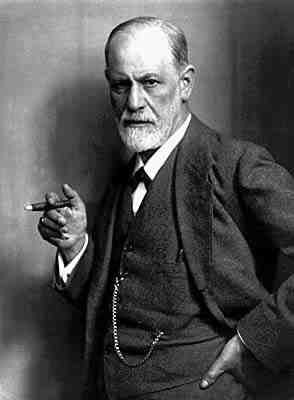
Sigmund Freud, Sofa King

Hal Woodin and I ventured out to Doylestown – the other end of the earth, as far as Pennsylvania is concerned – traveling through areas of Philadelphia we had never encountered before. The Michener museum was interesting, as was the man for whom it is named, though George Nakashima’s workshop, we discovered upon arrival, was closed for the holiday weekend. Nevertheless…

Book carving, “China Can Say No”; feminism; Anna Kronick (”The Life of Joseph”); World War excesses: where and to whom did they go?; “King Lear” by Barry Johnston; King Lear by William Shakespeare; interconnectivity of words and their meanings; collecting; listmaking; self-referential art; James Michener; poverty, terrorism and ecology; the Order of Magellan; marketing; “The God Delusion”; atheism; Freud; “The World is Flat”; Bob Barsky; Robert Oerter; “The Black Swan”; “A Brief History of Time”.

Friday, May 22

Ideas from Notebook, V

Crazy Horse Monument, Black Hills, SD

Viral chatter; bushmeat and poverty; industrialization of American agriculture; luck & happenstance in history; silkmoths and clawed frogs; Hive Collapse Syndrome; Barnes Museum; Hans Rosling; Amy Stewart; Equality Forum; limitations of sight; all matter emits light; gamma ray bursts; Yucatan asteroid; the Big Bang was silent; “Big Crunch”; Dark matter, Dark Energy; unilateral time and space; “becoming unstuck in time” and chrono-concurrency; Crazy Horse’s monument; Grand Canyon: 1000 yrs/in to deposit rock, 1000 yrs/ft to erode it, 5280 feet of depth; Everest, Goddess Mother of the World; Ethnosphere and Biosphere; language as a soul; lingual exogamy; ethnocide vs. genocide.

Thursday, May 21

Ideas from Notebook, IV

Ravana, Demon King of Lanka

After visiting the Penn Museum of Anthropology and Archaeology today with Sakina, I had a pretty full notebook. I also watched a TED talk this morning from Paul Stamets on “6 Ways Mushrooms can Save the World”, which failed to mention the ways in which they are currently… well, more on that later. Without further ado:

The culture of planned obsolescence; materialism and ideologies of consumption; frogs as fertility and sexuality symbols; Bes, Egyptian god of fertility, the lion-dwarf with his nine companion monkeys; ancient viral plagues; ideas of immortality; Ta Moko Maori scarification tattooing; Easter Island (Rapa Nui); Igbo (Africa) perceptions of society vs. nature, parallel modernity; storytelling and creation myths; Kumulipo; kou wood; ideoglyphs, heiroglyphs, structures of language and thought; Yuri Knorosov; Fremont Culture, Avonlea Complex; figurals such as katsina, statuettes, masks, totems; “Land Otter Man”; perspectives of war; Haida; realism vs. abstraction – cultural imperatives in artistic representation; Ravana the demon-king of Lanka; Tamil Tigers; locality of gods; monolatry; Tyrian purple, which inspired the Greek name of the Phoenicians; “Sea Peoples”; cartography; Planet Earth; “Biographica Literaria”; Egon Schiele; Serpinksi’s Triangle.

Wednesday, May 20

Food for Thought: Quotations

"You are a beautiful boy," he told the frog.
Above: Horned marsupial frog (Gastrotheca cornuta)

“Ethnobotany can give us a glimpse of the future,” (Ethnobotany 10).

“Coming from an industrial society where plants are primarily aesthetic parts of the urban environment…[one] must undergo a process of reeducation to see an environment shaped by plants and landforms, an environment where plants are an integral part of human lives,” (25).

“Long term changes in vegetation affect language and culture,” (26).

“Other cultures are not failed attempts at being modern, but alternate answers to the question, ‘what does it mean to be alive?’” – Wade Davis

“Of the many species that have existed on the earth – estimates run as high as fifty billion – more than ninety nine percent have disappeared. In light of this, it is sometimes joked that all of life today amounts to little more than a rounding error,” – Elizabeth Kolbert, “The Sixth Extinction?”, in New Yorker magazine (52)

“Education should be used to animate and generate belief, not just sophisticated doubt.” – Michael Roth, Wesleyan University president

Sunday, May 17

Ideas from Notebook, III

Cryptic species; William of Occam; “Buridan’s Ass”; Alberto Giacometti; Charles Demuth; Cezanne’s preoccupation with Montagne Sainte-Victoire; Back to Africa and the Nation of Islam; Nunn-Lugar; John Harshberger; Francis Alÿs on Cezanne and seeing*; ethnomusicology; Indo-European and ethnolinguisitics; schulzi bats in Suriname*; the Innocence Project; firestick, swidden and fallow; Bedouins, refugees, migrants and internally displaced peoples; “firewood crisis”; “Big Five” extinctions*; El Valle Amphibian Conservation Center; Dr. Rowan Williams, Archbishop of Canterbury.

Friday, May 15

Ideas from Notebook, II

Arcosanti; magazines (see “Thoughts on Museums”); terraforming with Doug Ross behind FCS middle school (probably starting next Tuesday); Baltimore museums; photo-chronicling; “upside-down tree” Bantu myth of creation; El Arbol, the “trinity tree”; acoustics of wood; electrical and water utilities; Freeman Dyson (vs. Al Gore); Julia “Butterfly” Hill; ProQuest and JStor; John Harshberger (1869-1929), who coined the word “ethnobotany”;

Two thoughts from Ethnobotany – 1. “Plants have always been more important than politics – both to human daily living and to history,” (9). 2. ” Ethnobotany can give us a glimpse of the world to come,” (10).

Wednesday, May 13

Project Mission

CONCEPT. The goal of this project is to examine several specific geopolitical situations, both current and historical, where people’s relationships with the botanical world – in terms of agricultural economies, religious mythologies surrounding plants, et al. – affect larger socio-political phenomena. Wars and atrocities are committed over territorial concerns based on precious metals and oil, but historically and more prevalently in human history, it has been the basic need for food and the croplands upon which to grow them that has been the root cause of strife.

ACTION. In this project, I will be examining the Jewish National Fund’s responsibility and involvement in the aggravation of the Israeli-Palestinian conflict; agricultural economies and upheaval in through the Soviet and Post-Soviet eras in the Former Soviet Union (FSU); and others, while doing service at the Lower Merion Conservancy in Gladwyne, PA, and assisting at Friends’ Central with leaf scans for Economic Botany and gardening and terraforming with Doug Ross behind the FCS Middle School. I will be taking several day trips: to the Penn Museum of Athropology and Archaeology, the UN and National Museum of Natural History in New York City, George Nakashima’s workshop in Doylestown, the Morris Arboretum, and others, on weekdays and weekends. Films, both cinema and documentary, as well as fiction and non-fiction readings will both be a part of the project.

HISTORY. The original focus of this project at its outset was to research historical and current international relations at the Foreign Policy Research Institute (1528 Walnut St, Philadelphia). I worked there for a week and a half before continuing my research independently at FCS, having realized that the imposition of menial tasks from my handlers at FPRI were a detriment to my independent research. I spent a large amount of time from May 7th to the middle of this week delineating the restructured project.